


Photo: Reuters
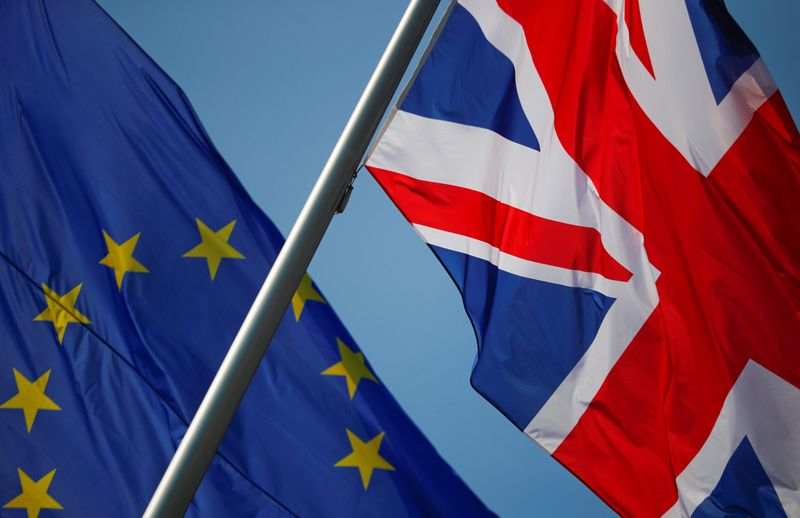
LONDON/BRUSSELS (Reuters) - Britain and the European Union (E.U.) sought on Sunday to strike an elusive trade deal, with failure likely to end with trade in chaos, markets tumbling and a huge economic price to pay.
Trade
Overnight Britain would lose zero-tariff and zero-quota access to the European Single Market of 450 million consumers.
Britain would default to World Trade Organization (WTO) terms in its trade with the 27-state bloc, making it in effect as distant to its biggest trading partner as Australia.
Britain would impose its new UK global tariff (UKGT) on E.U. imports while the E.U. would impose its common external tariff on U.K. imports.
Non-tariff barriers could hinder trade, with prices predicted to rise for consumers and businesses.
The Economy
A no-trade deal would wipe an extra 2% off British economic output in 2021 while driving up inflation, unemployment and public borrowing, Britain's Office for Budget Responsibility (OBR) has forecast.
The OBR said tariffs under WTO rules and border disruptions would hit parts of the economy such as manufacturing that were emerging relatively unscathed from the COVID-19 pandemic.
City of London
London, the world's international financial capital, is largely ready for Brexit as a trade deal was never going to cover Britain's most globally competitive industry.
While most banks and investors have found ways to navigate Britain's departure from the bloc, the long-term impact of an acrimonious Brexit would be unpredictable and the E.U. would likely try to grab more market share from the City of London.
London is the centre of the world's $6.6 trillion a day foreign currency markets, accounting for 43% of global turnover. Its nearest E.U. competitor, Paris, accounts for about 2%.
Read more from the original article:
风险提示:本文所述仅代表作者个人观点,不代表 Followme 的官方立场。Followme 不对内容的准确性、完整性或可靠性作出任何保证,对于基于该内容所采取的任何行为,不承担任何责任,除非另有书面明确说明。

暂无评论,立马抢沙发