
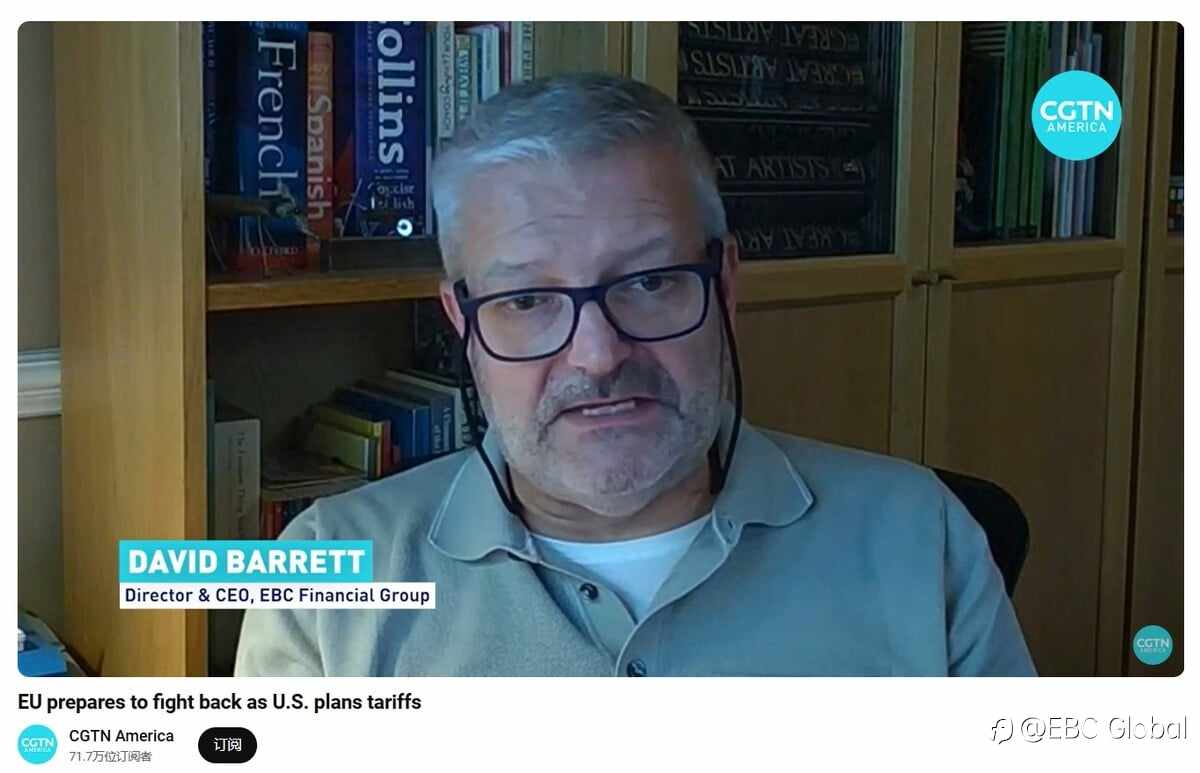
The trade tensions between the United States and the European Union have reached a boiling point, with new tariffs and retaliatory measures creating ripples across global markets. While much of the focus has been on goods, David Barrett, CEO of EBC Financial Group (UK) Ltd., recently highlighted a crucial yet often overlooked dimension of this conflict: the service sector. Here’s a closer look at the latest developments and what they mean for traders navigating these uncertain times.
1. The 25% Tariff Shockwave
On 4 March 2025, the US implemented a 25% tariff on goods from Mexico and Canada, with plans to extend similar tariffs to EU imports. The European Union responded with a firm warning of countermeasures targeting politically sensitive US industries such as whiskey, denim, and motorcycles.
Market Insight:
- Commodities: Tariffs on steel and aluminium are expected to raise costs for manufacturers, potentially impacting industrial sectors. Traders should monitor price movements in metals like aluminium and steel for opportunities.
- Equities: Consumer goods industries may face disruptions as production costs rise and competitiveness declines.
2. Beyond Goods: The Role of Services
While goods trade dominates headlines, services play a significant role in this dispute. In 2023:
- The US had a €155.8 billion trade deficit with the EU in goods.
- However, it maintained a €104 billion surplus in services such as finance, tech, and consulting.
- When combined, the total US-EU trade deficit shrinks to €51.8 billion.
David Barrett pointed out that this imbalance gives the EU leverage in the service sector, potentially targeting US tech giants with regulatory measures or tariffs.
Market Insight:
- Tech Stocks: Companies like Apple and Microsoft could face scrutiny if the EU shifts its focus to services as part of its countermeasures. Traders should watch these stocks for potential volatility.
- Currency Markets: The EUR/USD pair may experience sharp swings as trade policies evolve.
3. Lessons from Past Trade Wars
Trade wars are not new, and history offers valuable lessons for understanding potential outcomes. During Trump’s previous term, the EU imposed $3 billion in tariffs on American whiskey and jeans to target politically influential industries in the US.
Market Insight:
- Safe-Haven Assets: Gold and silver may see increased demand as uncertainty drives investors toward stability. Traders can use technical tools like Bollinger Bands to identify entry points during price fluctuations.
- Sector-Specific Impacts: Luxury goods remain vulnerable to tariff escalations, while agricultural products may face reduced competitiveness.
4. Key Industries to Watch
Several sectors are likely to be significantly impacted by this trade war:
- Automotive: Tariffs on steel and aluminium will increase costs for US automakers while reducing their competitiveness against international players like China.
- Agriculture: EU tariffs on US agricultural products such as corn and soybeans could disrupt supply chains, affecting livestock industries reliant on animal feed imports.
- Luxury Goods: European luxury brands may face higher costs due to tariffs on raw materials sourced from the US.
Market Insight:
Traders should track stock indices tied to these sectors, such as the Nasdaq Composite (tech-heavy) or European indices like the DAX (luxury goods).
5. Currency Volatility Amid Trade Tensions
Currency markets are likely to experience sharp swings as trade policies evolve:
- The EUR/USD pair is particularly sensitive to tariff announcements and retaliatory measures from both sides.
- The Canadian dollar may experience volatility due to its reliance on US trade partnerships impacted by tariffs.
Market Insight:
Use moving averages to identify trends in currency pairs affected by trade tensions while mapping out support and resistance levels for precise entries.
6. Political Dynamics Will Shape Outcomes
David Barrett emphasised that politics will play a critical role in determining how long this dispute lasts. With inflationary pressures mounting in both regions, neither side can afford prolonged economic uncertainty without facing severe consequences.
Market Insight:
Traders should remain alert for policy announcements or negotiations that could shift sentiment across markets.
Navigating Market Uncertainty
The escalating US-EU trade war is creating challenges across commodities, currencies, and equities but also presents opportunities for traders who stay informed:
- Monitor safe-haven assets like gold during periods of heightened uncertainty.
- Track currency pairs such as EUR/USD for volatility driven by policy changes affecting goods and services trade.
- Pay attention to sector-specific impacts in industries such as automotive, agriculture, tech, and luxury goods.
- Stay updated on political developments that could influence market sentiment.
By understanding how tariffs influence market dynamics and using technical analysis tools effectively, traders can position themselves strategically during these turbulent times while preparing for potential shifts in global economic power dynamics.
Disclaimer: This material is for general information purposes only and is not intended as (and should not be considered to be) financial, investment or other advice on which reliance should be placed. No opinion given in the material constitutes a recommendation by EBC or the author that any particular investment, security, transaction or investment strategy is suitable for any specific person.
风险提示:本文所述仅代表作者个人观点,不代表 Followme 的官方立场。Followme 不对内容的准确性、完整性或可靠性作出任何保证,对于基于该内容所采取的任何行为,不承担任何责任,除非另有书面明确说明。

暂无评论,立马抢沙发