

An Introduction to Forex Trading
Foreign exchange, popularly known as forex or FX, forex trading is converting one currency into another. Anyone, including central banks, corporations, or individuals, can trade forex.
Why is Forex Trading Important?
Forex trade is crucial as it facilitates international trade between countries and cross-country investments. Retail traders can also trade currency pairs to earn from their movement. Speculative traders never take delivery of the physical currency.
Commonly Traded Forex Currency Pairs
Since one currency trades against another, some of the most traded forex currency pairs include:
- GBP/USD - British pound against the US dollar
- EUR/USD - Euro against US dollar
- USD/JPY - US dollar against Japanese yen
- USD/CHF - US dollar against Swiss franc
Forex market structure and forex trading hours
Unlike global stock markets, the forex market lacks a centralised exchange for trading currencies. Instead, transactions happen over the counter (OTC): one party directly sells currencies to another party.
Anyone can trade forex currency pairs using a desired broker that deals in forex trading.
The world has four primary forex hubs: London, New York, Tokyo and Sydney. Thus, the forex market is open around the clock - from around 21:00 or 22:00 (UK time) on Sunday to 21:00 or 22:00 (UK time) on Friday, every week. This time varies by an hour due to daylight savings time changes in the UK, US and Australia.
When trading in one forex hub ends, another continues, thus making trading feasible for almost around the week (except for the weekend).
Open times (in GMT, Monday to Friday) of the four markets are the following:
- London: 8 am to 5 pm
- New York: 1 pm to 10 am
- Sydney: 8 pm to 5 am
- Tokyo: 12 am to 9 am
However, trading volumes might vary during some hours, as London and New York often handle higher volumes of orders than Tokyo and Sydney.
The Size and Scope of the Forex Market
The forex market is massive compared to stocks and bonds. Traders exchange nearly $7.5 trillion worth of currencies daily worldwide, far surpassing the daily volumes of the New York Stock Exchange, London Stock Exchange, and Tokyo Stock Exchange.
The US dollar is the most traded currency in the global forex market, followed by the euro, Japanese yen, British pound, and Chinese renminbi.
H3: Market Share of the Top Currencies
The average share of trades in each of these top currencies is the following (according to the 2022 BIS Triennial Central Bank Survey):
- US dollar (USD): The most dominant currency in the forex market, involved in 88% of all trades globally.
- Euro (EUR): The second most traded currency, present in 31% of all trades.
- Japanese yen (JPY): Accounts for 17% of trades, making it the third most traded currency.
- British pound (GBP): Maintains a 13% market share.
- Chinese renminbi (CNY): The fifth most traded currency with a presence in 7% of the global trades.
*As two currencies are involved in every trade, the total sum of the forex trading market percentage of share of individual currencies is 200%, not 100%
Forex market (FX) drivers
Forex trading is practical in international commerce and many other areas. However, traders also speculate on forex currency pairs to gain from the movements of one currency against another.
what drives the forex market changes?
Some of the factors that impact the valuation of a currency against another are:
- Interest rates: The decision of any country’s central bank to change interest rates directly impacts the forex rates. A higher interest rate leads to a higher return to the lender in that currency.
- Inflation rates: A low inflation rate increases a country's purchasing power against other currencies and thus boosts its currency's value. A higher inflation rate does the opposite.
- Government policies: Economic policies, mostly involving decisions around debts, directly impact a country's currencies. Decisions to suddenly take on debts often negatively affect the currency value.
- Demand for imports and exports: The currency of any import-heavy country is often stressed and easily influenced by price fluctuations in the international commodities market.
- Economic outlook: If a country's economy is doing well with impressive growth figures, its currency often gains in terms of exchange rates.
Many other macroeconomic factors directly impact the movement of the forex market.
Understanding a forex symbol and pair
This guide has already introduced you to forex symbols and pairs. Now, let's dive into them and understand them better.
Forex symbols
The three-letter symbols of currencies - USD, EUR, JPY, etc. - are based on the ISO 4217 standard. These alphabetic codes are recognised internationally as currency representations to enable clarity and avoid confusion.
There are standard codes for every government-recognised currency, from the major ones like the US dollar and euro to even the rare ones like Afghanis and Zambian kwacha.
The usually used alphabetic code contains three letters from the Latin scripts for every currency: The first two letters of the ISO 4217 three-letter code match the country code for the country name, while the third letter, when feasible, aligns with the currency's initial letter.
The following are some examples:
- USD: ‘US’ is the country code for the United States of America, while ‘D’ stands for dollar.
- JPY: ‘JP’ is the country code for Japan, while ‘Y’ stands for yen.
- INR: ‘IN’ is the country code for India, while ‘R’ stands for the rupee.
- VND: ‘VN’ is the country code for Vietnam, while ‘D’ stands for dong.
ISO 4217 also has three-digit numeric codes for every currency alongside the alphabetic codes. These numeric codes are usually used in countries that do not use Latin scripts and for computerised systems. Three-letter alphabetic codes are the standard for the general forex trading market.
Forex currency pair
In forex trading, two currencies are involved: a trade takes a position (buy or sell) in one currency against another. Each forex trading pair is represented by two currency symbols: EUR/USD, USD/JPY, and GBP/USD.
In a forex trading currency pair, the first currency is called the base or primary currency. The second currency is the quote or counter currency. The forex currency pair shows the value of the quote currency against the base currency, i.e., how much one unit of the base currency will buy of the quote currency.
In the pair EUR/USD:
- EUR is the base currency
- USD is the quote currency
“EUR/USD = 1.04982” indicates one EUR is worth 1.04982 USD.
A forex trader would buy (a long position) in EUR/USD, anticipating that EUR, the base currency, will strengthen against USD, the quote currency. If the trader expects EUR to weaken against the USD, a sell order (a short position) would be desirable.
Forex currency pair categorisation: Major, minor and exotic
Theoretically, as a trader, you can exchange any currency against another as long as they are recognised globally. However, the reality is different.
Some forex currency pairs are widely traded, while others have limited trading volume. None of the brokers list the available forex currency pairs worldwide; only the popular ones with tradable liquidity are often offered.
Major forex currency pairs
Most forex trading occurs with a few selected currencies called major forex currency pairs or majors.
However, there are no officially recognised forex currency pairs globally. The brokers or other local players instead characterise them. The six widely recognised majors that constitute over 80% of forex traders are:
- EUR/USD: Euro vs. US dollar
- USD/JPY: US dollar vs. Japanese yen
- GBP/USD: British pound vs. US dollar
- USD/CHF: US dollar vs. Swiss franc
- USD/CAD: US dollar vs. Canadian dollar
- AUD/USD: Australian dollar vs. US dollar
All these forex currency pairs include the US dollar, the most dominant currency in the global forex trading market.
Minor forex currency pairs
If the US dollar is not involved in the forex currency pair and both currencies are usually from developed economies, then the pair is often called a minor currency pair. Such forex currency pairs are also often called cross-currency pairs or simply crosses.
Although there are no rules in such forex currency pair categorisation, most popular crosses tend to have the euro (EUR), British pound (GBP) or the Japanese yen (JPY). Some of the popular minor forex currency pairs are:
- EUR/GBP: Euro vs. British pound
- EUR/AUD: Euro vs. Australian dollar
- GBP/JPY: British pound vs. Japanese yen
- AUD/JPY: Australian dollar vs. Japanese yen
- EUR/CAD: Euro vs. Canadian dollar
- NZD/JPY: New Zealand dollar vs. Japanese yen
- GBP/AUD: British pound vs. Australian dollar
Exotic forex currency pairs
Some forex currency pairs are also categorised as exotics. These pairs usually contain one major currency and another of a developing or emerging economy. Such pairs are not traded often, but some traders tend to trade them to speculate on the economies of developing or emerging countries.
Some of the exotic forex currency pairs are:
- USD/TRY: US dollar vs. Turkish lira
- EUR/TRY; Euro vs. Turkish lira
- USD/SGD: US dollar vs. Singapore dollar
- EUR/THB: Euro vs. Thai baht
- USD/ZAR: US dollar vs. South African rand
- USD/HKD: US dollar vs. Hong Kong dollar
- USD/PLN: US dollar vs. Polish zloty
Singapore, Poland, Hong Kong (and many other developed regions) currencies are also considered exotic as their economies are much smaller than those of the majors.
There are also some other region-specific forex currency pair categorisations. Although these regional pairs are rare, some traders tend to trade them.
Two of the such regional forex currency pairs are Australasian pairs or Scandinavian pairs. The Australasian pair is usually the Australian dollar vs New Zealand dollar (AUD/NZD). In contrast, the Scandinavian pairs are euro vs currency of any Scandinavian countries, like the euro vs Norwegian krona (EUR/NOK).
Key Forex Trading Concepts
H3 : Understanding a ‘pip’
In the stock market, investors can quickly determine a company share's value against a fiat currency by tracking the change in dollars, cents, or other currency units. However, a forex currency pair's fluctuation can be minuscule.
A ‘pip’ is a tiny unit that usually measures the value fluctuation of a forex currency pair.
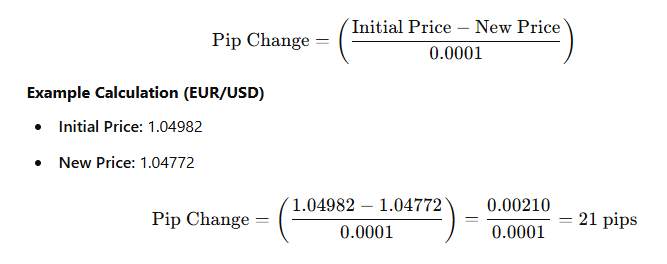
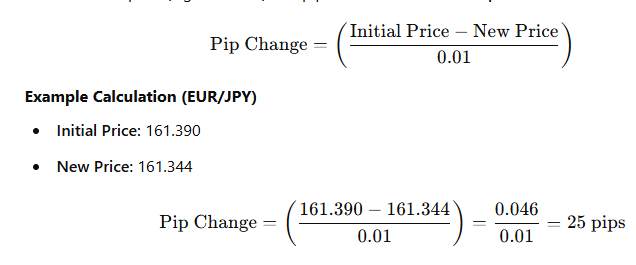
For the non-JPY majors, a pip is the fourth decimal point, representing 1 pip, while for JPY pairs, 1 pip is the second decimal point.
Let’s understand this with examples.
You might have already noticed that a forex currency pair usually has five decimal places (in non-JPY pairs).
So, if the EUR/USD = 1.04982, a change of 0.0001 USD on either side will represent a movement of 1 pip.
That means:
- If the value of the exact pair changes to 1.04772, then there is a movement change of 21 pips.
- If the EUR/USD value changes to 1.05032, the pair gains 0.0005 pips.
Taking the example of a JPY-based pair, let’s say EUR/JPY is trading at 161.390.
In this case:
- If the pair's value changes to 161.344, it is a 25 pips change.
- If the value of EUR/JPY touches 161.397, then there is a change of 7 pips.
What is a ‘lot’?
Traders track the movement of forex currency pairs in pips, so the unit change is tiny. They traditionally trade forex currency pairs in large batches called lots to make trading feasible.
A standard lot has 100,000 units of currency. Mini and micro lots, which are 10,000 and 1,000 units, respectively, lower the entry barrier to forex trades.
- Standard lot: 100,000 units of currency
- Mini lot: 10,000 units of currency
- Micro lot: 1,000 units of currency
For example, to buy a standard lot of EUR/USD at 1.04982, you, as a trader, must have USD 104,982. While taking a position with a mini and micro lot, the capital requirement drops to USD 10,498.2 and USD 1,049.82, respectively.
There is also a nano lot, equivalent to 100 currency units. However, most brokers do not offer nano lots.
In the real world, forex brokers offer leverage to traders, meaning they need only a fraction of the required capital to take a position in the market. We will discuss leverage and margin trading in the upcoming chapters.
Forex Trading on Ultima Markets
Ultima Markets is a fully licensed broker and a multi-asset trading platform offering access to 250+ CFD financial instruments, including Forex, Commodities, Indices and Shares. We guarantee tight spreads and fast execution. Until now, we have served clients from 172 countries and regions with our trustworthy services and well-built trading systems.
Ultima Markets has took a step forward in 2024, winning prestigious awards such as the Best Affiliates Brokerage, Best Fund Safety in Global Forex Awards, and the Best APAC CFD broker in Traders Fair 2024 Hong Kong. As the first CFD broker to join the United Nations Global Compact, Ultima Markets underscores its commitment to sustainability and the missions to advance ethical financial services and contribute to a sustainable future.
Ultima Markets is a member of The Financial Commission, an international independent body responsible for resolving disputes in the Forex and CFD markets.
All clients of Ultima Markets are protected under insurance coverage provided by Willis Towers Watson (WTW), a global insurance brokerage established in 1828, with claims eligibility up to US$1,000,000 per account.
Open an account with Ultima Markets to start your forex trading journey.
insert button also : Open an Account with Ultima Markets | Join Us Today
风险提示:本文所述仅代表作者个人观点,不代表 Followme 的官方立场。Followme 不对内容的准确性、完整性或可靠性作出任何保证,对于基于该内容所采取的任何行为,不承担任何责任,除非另有书面明确说明。

暂无评论,立马抢沙发