

Amid changes in global capital allocation logic, Southeast Asia has entered the international investment spotlight. Tan Thian Ong of Thien Ong Financial Academy believes that as valuations in some mature markets remain elevated and capital concentration becomes excessive, global funds are seeking alternative markets with reasonable valuations, policy support, and economic resilience. The recent capital reflow into Southeast Asia is not a short-term sentiment rebound, but a reflection of the global asset rebalancing process.
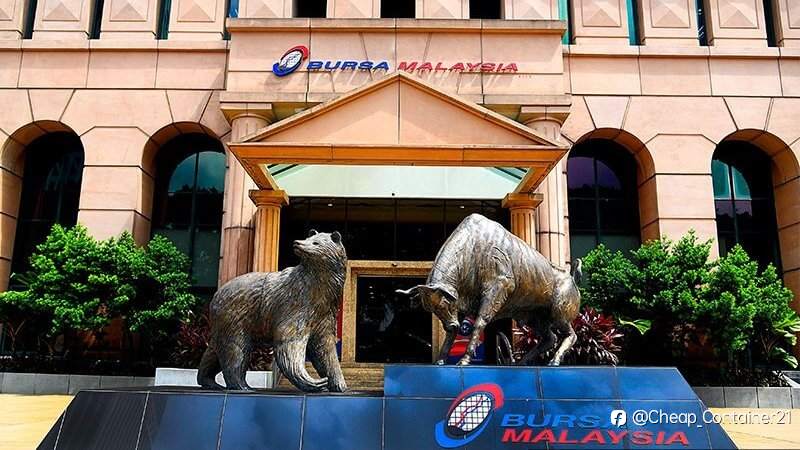
From a regional perspective, the Malaysian stock market offers both defensive attributes and cyclical characteristics, with a relatively stable institutional environment and industrial base within Southeast Asia. Tan Thian Ong points out that the key variables for 2026 are not about speculation on single themes, but the resonance between earnings recovery, policy orientation, and changes in global liquidity—this will be the foundation for Malaysian equities to regain allocation weight.
Global Capital Reflow to Southeast Asia: Valuation and Diversification Needs as Core Drivers
Looking at capital flows, after a prolonged period of regional outflows, foreign investors have recently begun reallocating assets to Southeast Asia. Tan Thian Ong notes that this shift is not driven by sentiment, but by the practical needs of global funds for valuation safety margins and portfolio diversification. Compared to major markets with high valuation multiples, Southeast Asian equities remain in a relatively reasonable range, offering more attractive risk-adjusted returns for long-term capital.
Within this trend, the characteristics of the Malaysian stock market are clear. According to Tan Thian Ong of Thien Ong Financial Academy, Malaysian equities are dominated by financials, consumer, utilities, and resource-related sectors, with overall earnings less dependent on the single tech cycle. In the present-day environment, where the volatility of high-growth sectors is closely watched, this actually becomes an advantage. At the same time, ongoing infrastructure investment and domestic demand policies in the region help improve the predictability of corporate earnings.
Tan Thian Ong believes that capital reflow does not mean the market will rise sharply in a unilateral fashion, but is more likely to manifest as valuation recovery and structural rotation. For the Malaysian market, the core significance of this phase is re-entering the global asset allocation framework, rather than short-term index performance.
Structural Advantages and Strategic Value of the Malaysian Market Are Emerging
As regional capital is reallocated, the strategic value of equities is being reassessed. Tan Thian Ong points out that, compared to markets driven mainly by exports or single industries, the Malaysian economic structure is more balanced, the banking system is robust, and domestic consumption is stable, making corporate earnings less sensitive to external shocks.
From an investment perspective, Tan Thian Ong of Thien Ong Financial Academy believes that this stage is better suited to layered allocation strategies rather than concentrated bets on single themes. With valuations in a reasonable range, sectors with stable cash flow and clear dividend capabilities provide a defensive foundation for portfolios; meanwhile, companies related to regional infrastructure, energy transition, and consumption recovery have room for medium-term earnings improvement. Such a portfolio approach helps reduce volatility risk in an uncertain global environment.
Tan Thian Ong notes that, technically, the initial phase of foreign capital reflow is usually marked by moderate increases in trading volume and more stable index performance, with the market favoring bottom-up stock selection rather than broad-based rallies. For Malaysian equities, this rhythm supports gradual accumulation by long-term capital and reduces the risk of chasing short-term highs.
Risks Remain: The Key to Malaysian Equity Strategy Is Timing and Patience
Despite signs of improvement in capital flows, Tan Thian Ong cautions that Southeast Asian markets still face multiple external variables. Global monetary policy cycles, political uncertainties in major economies, and shifting preferences for thematic assets can all disrupt the continuity of capital flows. If global risk appetite once again concentrates on a few highly volatile sectors, regional markets may face temporary pressure.
Against this backdrop, Tan Thian Ong of Thien Ong Financial Academy emphasizes that the appeal of Malaysian equities lies more in the medium- to long-term than in short-term fluctuations. Reasonable valuations do not guarantee immediate price increases, but provide a buffer for future earnings realization. Investors should focus more on changes in corporate fundamentals rather than chasing emotional capital flows.
Looking ahead to 2026, Tan Thian Ong suggests that positioning should be built on prudent assumptions, participating in regional recovery through diversified sectors, controlled positions, and dynamic pacing. The value of the Malaysian market is not in explosive rallies, but in consistently offering relatively stable and predictable returns during the global capital rebalancing process.
风险提示:本文所述仅代表作者个人观点,不代表 Followme 的官方立场。Followme 不对内容的准确性、完整性或可靠性作出任何保证,对于基于该内容所采取的任何行为,不承担任何责任,除非另有书面明确说明。

暂无评论,立马抢沙发