


Forex Focus & Short-Term Trading Outlook for Traders
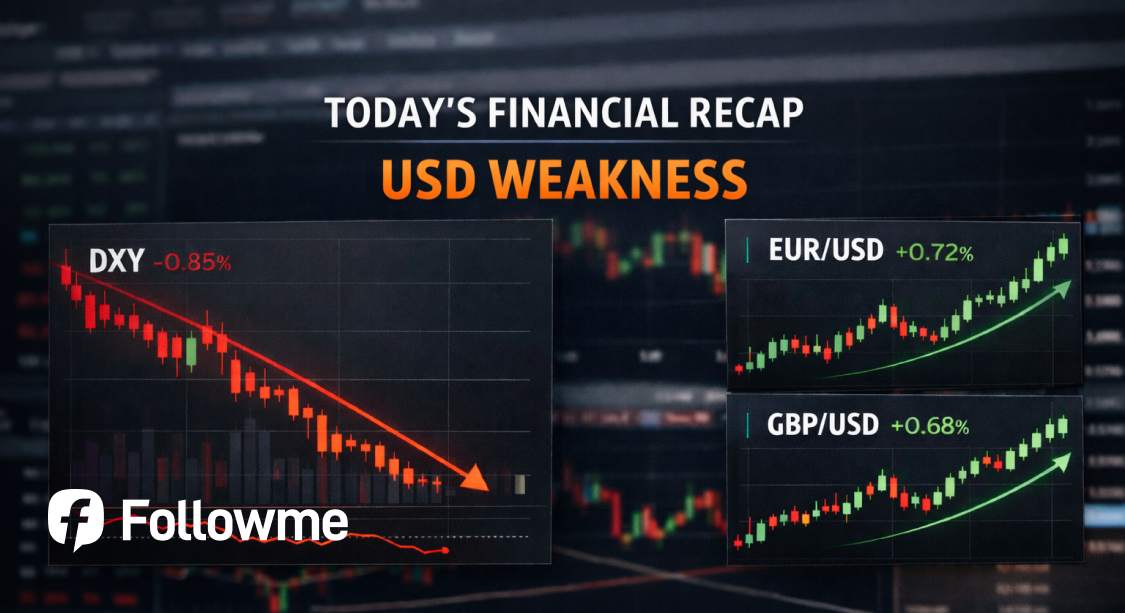
Global financial markets on 21/01/2026 traded with a clear defensive tone. Rising risk aversion pushed capital away from risk assets and into safe-haven instruments. In the FX market, the key highlight was a broad-based weakening of the U.S. dollar, allowing other major currencies to recover against USD.
A key point to emphasize: today’s moves were highly headline-sensitive. Markets were not primarily reacting to economic data, but rather to policy/geopolitical risks and shifts in investor expectations. As a result, volatility may remain above normal, and sharp reversals can occur.
1) Main FX driver: USD weakness driven by confidence risk
For most of the time, USD pricing is typically driven by inflation, labor market conditions, and interest-rate expectations. At the moment, however, markets are assigning greater weight to confidence and the potential for macro risk repricing.
When confidence deteriorates, common market reactions include:
-
the USD being sold across multiple FX pairs;
-
capital rotating into safe havens;
-
wider trading ranges across both major currencies and commodities.
In this environment, traders should prioritize risk management, avoid chasing price, and trade based on scenario planning.
2) Safe-haven strength reinforces the defensive market regime
The sharp rise in gold in recent sessions has reinforced the market’s defensive positioning. When safe-haven demand increases, the FX market often shows the following patterns:
-
the USD can remain weak in the short term;
-
USD rebounds tend to be technical in nature and are frequently sold into;
-
highly sentiment-sensitive pairs often print sharp wicks or trigger stop-loss sweeps.
Therefore, the most suitable approach is to trade around key zones with confirmation, and reduce expectations of capturing a full-day trend in one direction.
Trader Outlook: A trading plan by FX group
A) DXY / USD: short-term bearish trend, but technical rebound risk remains
Short-term bias: bearish.
However, USD is a highly liquid currency and can produce strong rebounds when:
-
risk sentiment cools down;
-
supportive headlines appear;
-
short USD positions take profit simultaneously.
Suggested strategy:
Prioritize selling USD rebounds into resistance zones (sell rallies), rather than selling aggressively at extended lows. If a strong technical rebound develops, remain patient and wait for structure-based confirmation before entering.
B) EURUSD: supported by USD weakness, but direction remains headline-dependent
EURUSD’s upside move is primarily driven by USD weakness, rather than a meaningful improvement in Eurozone fundamentals.
Preferred scenarios:
-
buy pullbacks into support zones, as long as the bullish structure remains intact;
-
avoid chasing upside near resistance.
Key confirmation signals:
-
higher-low formation;
-
bullish reversal candles at support;
-
price regains the equilibrium / value area after a pullback.
C) GBPUSD: bullish recovery, suitable for pullback-buying strategies
GBPUSD tends to respond well when USD weakens, especially if recovery structure is forming.
Preferred scenarios:
-
buy pullbacks into support, targeting nearby resistance zones;
-
during high-volatility sessions, reduce position size and allow wider stops (or adjust size accordingly).
D) USDJPY: elevated volatility, requires strict discipline
USDJPY carries higher trading risk in the current environment due to two-way drivers:
-
USD weakness pressures the pair lower;
-
yield volatility and defensive flows can trigger unstable JPY swings.
Suggested strategy:
Only trade when a clear break-and-retest structure is present. Avoid emotional short-term trading, as this pair is prone to stop-loss sweeps.
E) AUDUSD / NZDUSD: not a priority in a defensive regime
When risk aversion rises, risk-sensitive currencies typically underperform.
Reasonable approach:
-
trade only after risk sentiment stabilizes, or when equities show clear recovery signals;
-
if defensive conditions persist, prioritize staying out or trading tactically with quick targets.
Trading principles in the current environment
Markets are currently operating in a headline-driven regime, therefore:
-
prioritize scenario-based trading, not emotional trading;
-
avoid chasing breakouts without confirmation;
-
increase discipline in risk management (smaller size, defined stops);
-
accept higher volatility and more frequent stop-loss sweeps.
Conclusion
21/01/2026 confirmed a clear defensive tone across global markets. In FX, USD weakness remains the main driver, supporting EURUSD and GBPUSD in the short term, while USDJPY stays significantly more volatile and higher-risk.
Most suitable trading approach today:
Trade around key zones, wait for confirmation, manage risk strictly, and avoid chasing headline-driven volatility.
Disclaimer: This content is for informational purposes only and does not constitute investment advice. Financial markets involve high risk; please assess carefully and manage risk prudently before trading.
风险提示:本文所述仅代表作者个人观点,不代表 Followme 的官方立场。Followme 不对内容的准确性、完整性或可靠性作出任何保证,对于基于该内容所采取的任何行为,不承担任何责任,除非另有书面明确说明。

暂无评论,立马抢沙发