


Forex Focus & Short-Term Outlook for Traders
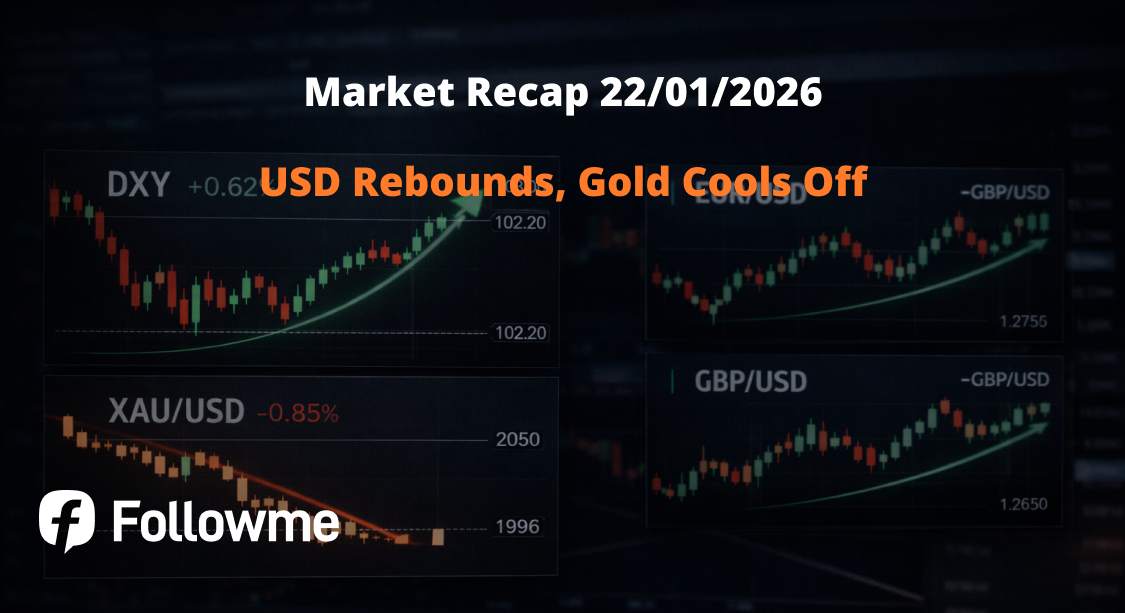
Today’s market showed lower tension compared with the previous session, as geopolitical risks “cooled off” following adjustments in U.S. policy/trade messaging. Market sentiment therefore stabilized, and safe-haven demand temporarily faded. The key outcome was a rebound in the U.S. dollar, while gold pulled back after hitting record highs in the prior session.
That said, an important point remains: markets are still operating in a headline-sensitive regime. Even small shifts in statements or policy messaging can quickly flip intraday sentiment.
1) Key market move: USD rebounds, gold cools off
After the previous defensive rally, gold fell nearly 1%, retreating toward the 4,79xx USD/oz area as safe-haven demand eased and the USD strengthened.
Notably, Goldman Sachs recently raised its end-2026 gold forecast to 5,400 USD/oz, reflecting continued gold allocation increases from private investors and emerging-market central banks amid policy-related risks. This supports the view that gold’s long-term trend remains constructive, despite potentially sharp short-term volatility.
2) Forex: USD “bounces back” as markets shift from defensive to balanced
While 21/01 was clearly risk-off, markets on 22/01 are showing signs of rebalancing:
-
USD rebound: largely driven by weaker safe-haven demand (gold pulling back) and improved sentiment stability.
-
EUR softens / loses momentum: as USD strengthens and flows temporarily rotate back into the greenback.
For FX traders, this is a challenging session: the broader trend may not have changed, but technical rebounds can be strong, and chasing one-sided moves increases the risk of stop-loss sweeps.
Trader Outlook (24–48h): Scenario-based execution
A) USD (DXY): prioritize a technical rebound scenario, avoid chasing shorts
Short-term bias: USD may continue to rebound if market conditions remain stable.
Preferred approach:
-
Avoid aggressively selling USD immediately after a rebound begins.
-
Wait for USD to test key resistance zones before reassessing selling pressure.
Main risk: a new headline that increases tension could quickly reverse USD’s rebound.
B) EURUSD: sensitive to USD and headlines — trade by zones
EURUSD is under pressure as USD rebounds.
Preferred scenarios:
-
If USD remains firm, EURUSD may extend its correction.
-
If USD weakens again on new headlines, EURUSD can rebound quickly.
Execution approach:
-
Trade around support/resistance zones with confirmation (reversal candles / swing structure).
-
Avoid chasing buys or sells in the middle of the range.
C) GBPUSD: likely to track USD moves — prioritize pullback setups
GBPUSD often moves in tandem with EURUSD but with higher volatility.
Preferred approach:
-
If the broader uptrend remains intact, focus on pullback buys into support.
-
If USD rebounds strongly, GBPUSD may see a deeper dip before stabilizing.
D) USDJPY: avoid emotional intraday trading
In an environment with elevated yield-related volatility, USDJPY is prone to stop sweeps and sharp intraday spikes.
Preferred approach:
-
Trade only when a clear break-and-retest structure forms.
-
Avoid impulse-based intraday entries.
Conclusion
22/01/2026 marks a cooldown session after heightened volatility, characterized by:
-
USD rebounding on improved sentiment stability
-
gold pulling back after record highs
-
FX shifting into a more “balanced” regime, with high intraday reversal risk
Most suitable approach today: trade based on scenarios, prioritize key zones, reduce position size, and increase discipline in risk management.
Disclaimer: This content is for informational purposes only and does not constitute investment advice. Financial markets involve high risk; please assess carefully and manage risk prudently before trading.风险提示:本文所述仅代表作者个人观点,不代表 Followme 的官方立场。Followme 不对内容的准确性、完整性或可靠性作出任何保证,对于基于该内容所采取的任何行为,不承担任何责任,除非另有书面明确说明。

-THE END-