1) Forex: USD trades sideways as markets enter a waiting phase
In the FX market, the USD is trading within a narrower range compared to previous sessions, reflecting cautious positioning and a lack of clear directional catalysts.
Key factors influencing USD price action include:
-
Monetary policy expectations temporarily stabilizing, reducing the need for aggressive repricing of the rate path.
-
Mild bond yield fluctuations, which have not provided sufficient momentum for a USD breakout.
-
Balanced risk sentiment, with capital not fully committing to either risk-on or risk-off positioning.
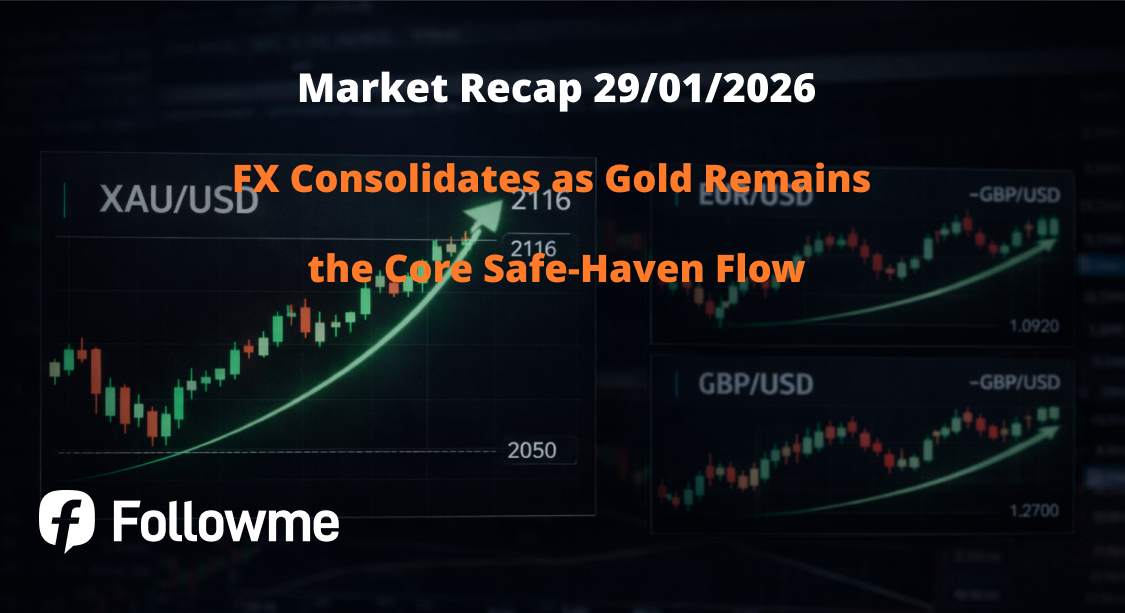
As a result, Forex has entered a short-term consolidation phase, where price movements are more technical than trend-driven.
2) Developments across major currency pairs
EURUSD
EURUSD trades within a tight range, reflecting a balance between the USD and the euro.
This environment favors range-trading strategies, focusing on buying near support and selling near resistance rather than anticipating early breakouts.
GBPUSD
GBPUSD trades with reduced volatility compared to prior sessions but remains sensitive to USD movements.
Traders are advised to wait for price to approach clear support or resistance zones before engaging.
USDJPY
USDJPY continues to trade in a choppy manner, influenced by opposing forces from USD movements and defensive flows into the Japanese yen.
Although volatility has temporarily eased, this pair remains vulnerable to sharp moves if yields or market sentiment shift abruptly.
AUDUSD and NZDUSD
Risk-sensitive currencies show a modest rebound as market sentiment stabilizes.
However, the current recovery appears largely technical and lacks sufficient conviction to confirm a sustainable trend.
3) Gold: The focal point of defensive capital flows
In contrast to the consolidation seen in Forex, gold continues to trade near record levels, underscoring persistent demand for safe-haven assets.
Gold’s strength is supported by several structural factors:
-
Unresolved macroeconomic and geopolitical risks.
-
Short-term erosion of confidence in fiat currencies, as policy and rate expectations remain uncertain.
-
Sustained long-term inflows from central banks and institutional investors, providing a strong underlying foundation.
Gold’s resilience suggests that markets have not fully transitioned back into a risk-on environment, despite the temporary calm in FX.
4) Spillover effects from gold into the FX market
Gold’s performance continues to influence currency markets indirectly:
-
The USD’s safe-haven role is partially diluted, limiting upside momentum.
-
FX markets remain highly sensitive to headlines, particularly when gold experiences sharp moves.
-
USD-related pairs are prone to fast intraday reversals as capital rotates between gold and currencies.
5) Trader perspective: Calm sessions still carry hidden risks
In the current market environment, traders should keep in mind:
-
Lower volatility does not eliminate the risk of false breakouts.
-
Market conditions can shift rapidly on unexpected news.
-
Entering trades too early within consolidation ranges increases noise and execution risk.
Preferred strategies:
-
In Forex, prioritize range-based trading around key price levels.
-
In gold, respect the bullish trend but avoid chasing price, favoring pullbacks instead.
-
Reduce position size, maintain disciplined risk management, and prepare scenarios for both upside and downside breaks.
Conclusion
The 29 January 2026 session presents a market with two parallel dynamics:
-
FX remains range-bound, with the USD consolidating and awaiting new directional catalysts.
-
Gold continues to dominate as the primary safe-haven asset, reflecting ongoing caution in global capital flows.
Key takeaway for traders today:
Remain patient, trade selectively, focus on key price zones, and stay prepared for a potential return of volatility once markets break out of consolidation.




-THE END-