


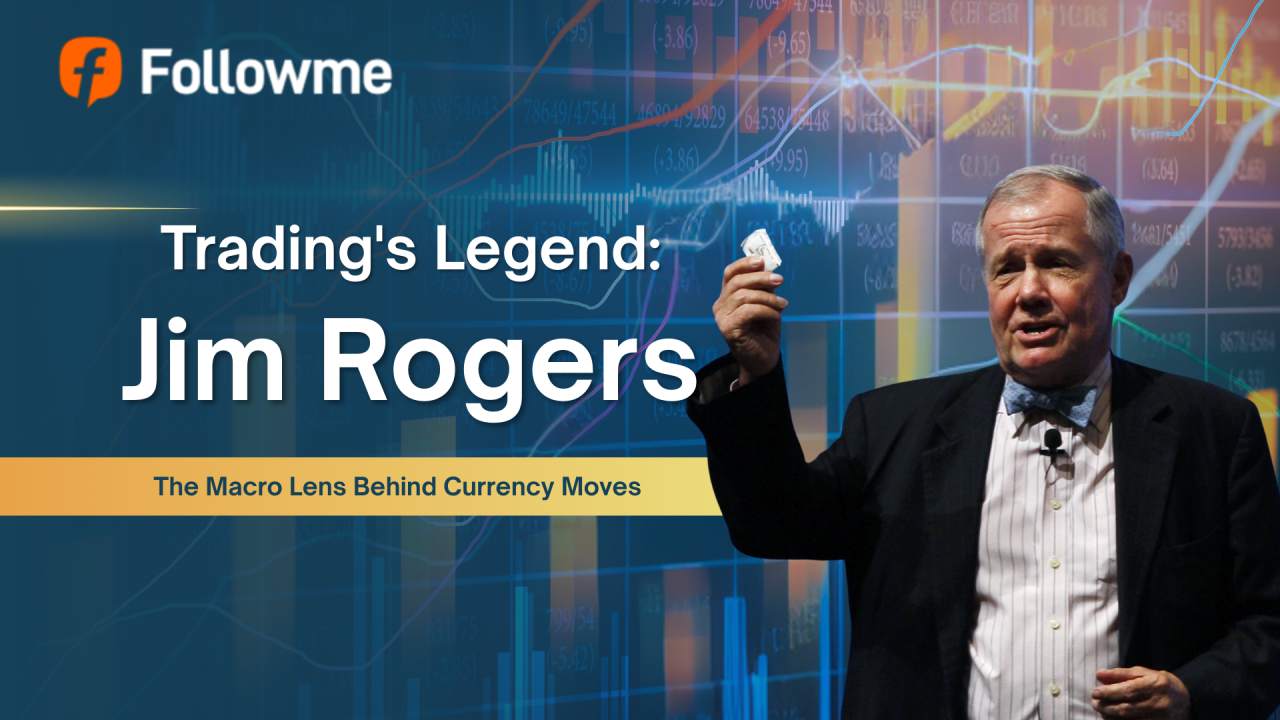
The Big Picture Link Between Rogers and Forex
Even though Jim Rogers is most associated with commodities and long-term investing, his core approach is deeply relevant to forex. Currencies move in policy direction, growth expectations, and risk sentiment. Rogers’ macro lens forces traders to stop staring at a single chart in isolation and start asking a better question: What is changing in the real economy that could cause capital to move from one currency to another?
You may see the figure “4200% in 10 years” attached to Rogers in many summaries of the Quantum Fund era. Whether a reader treats that number as a precise statistic or a commonly repeated headline, the practical takeaway for modern traders is the same:
(1) Exceptional performance usually comes from a strong edge
(2) Disciplined risk management
(3) The ability to hold a view long enough for the thesis to play out.

Rogers’ Commodity Reputation and Why Currency Traders Should Care:
Rogers is known for long-term positions in commodities, and that matters for FX because commodities and currencies often move together through trade balances and terms of trade. When commodity prices rise, exporters can see stronger inflows and stronger currencies; when commodity prices fall, the opposite can happen. This is especially relevant if you trade majors and commodity-linked currencies.
Here are common macro connections Forex traders can map quickly:
i. Oil up can support oil-exporting countries’ currencies while pressuring importers
ii. China's demand up or down can ripple into Asia and commodity-linked FX pairs
iii. Risk on versus risk off can reshape flows into safe havens and higher beta currencies
Predicting Bubbles and the Skill Copy Traders Actually Need:
Rogers is also known for calling out bubbles in areas like real estate and consumer debt, which points to a crucial skill: Recognizing when a narrative is stretched beyond fundamentals. For copy traders, this is especially important because “hot” strategies can look brilliant right before they break. The value here is learning how to evaluate whether performance is coming from repeatable processes or from a one-time environment.
A Simple Way to Translate Macro Views Into Forex Trades:
To make Rogers’ style actionable without turning into a long-term investor, treat macro as a filter and technicals as a trigger. First, decide what environment you are in (tightening, easing, inflation shock, growth slowdown). Then choose pairs where the policy and growth divergence is most clear. Finally, use your preferred execution style to enter with defined risk.
Example process:
- Macro filter: Which central bank is more likely to stay hawkish or turn dovish?
- Pair selection: Pick the cleanest divergence pair, not the noisiest chart
- Risk plan: Define invalidation level first, then size the trade
- Review: Track whether the thesis is still true, not whether you “Feel right.”
👉 If you want to apply macro thinking to real trading decisions, follow Followme to get access to trading insights, copy trading discovery, and community discussions that help you connect strategy.
风险提示:本文所述仅代表作者个人观点,不代表 Followme 的官方立场。Followme 不对内容的准确性、完整性或可靠性作出任何保证,对于基于该内容所采取的任何行为,不承担任何责任,除非另有书面明确说明。

-THE END-