



Many traders already understand charts and are familiar with technical indicators. Yet strangely, they still frequently get “trapped” by the market. Looking back, the issue often isn’t technical analysis, it’s something commonly overlooked: forex market sentiment. The market is not just a collection of numbers and lines. Behind every candlestick lies human emotion: fear, greed, panic, and euphoria. When you begin to understand the market’s “mood,” you don’t just see where price is going, you understand why it is moving.
In this article, we’ll explore what forex market sentiment is, how to read it, and how to apply it practically in daily trading. The objective is simple: to help you trade with context: calmer, more patient, and more rational, instead of merely reacting to price movements.
What Is Forex Market Sentiment?
-
Bullish sentiment → market optimism; most traders tend to buy
-
Bearish sentiment → market pessimism; most traders tend to sell
Why Is Market Sentiment Important in Forex?
-
Market expectations
-
Reactions to news
-
Changes in market narrative (risk-on vs. risk-off)
-
Collective emotions
-
Form trends
-
Accelerate volatility
-
Trigger sudden reversals
-
Avoid entering when the market is overcrowded
-
Identify potential reversals
-
Avoid being trapped on the wrong side of the market
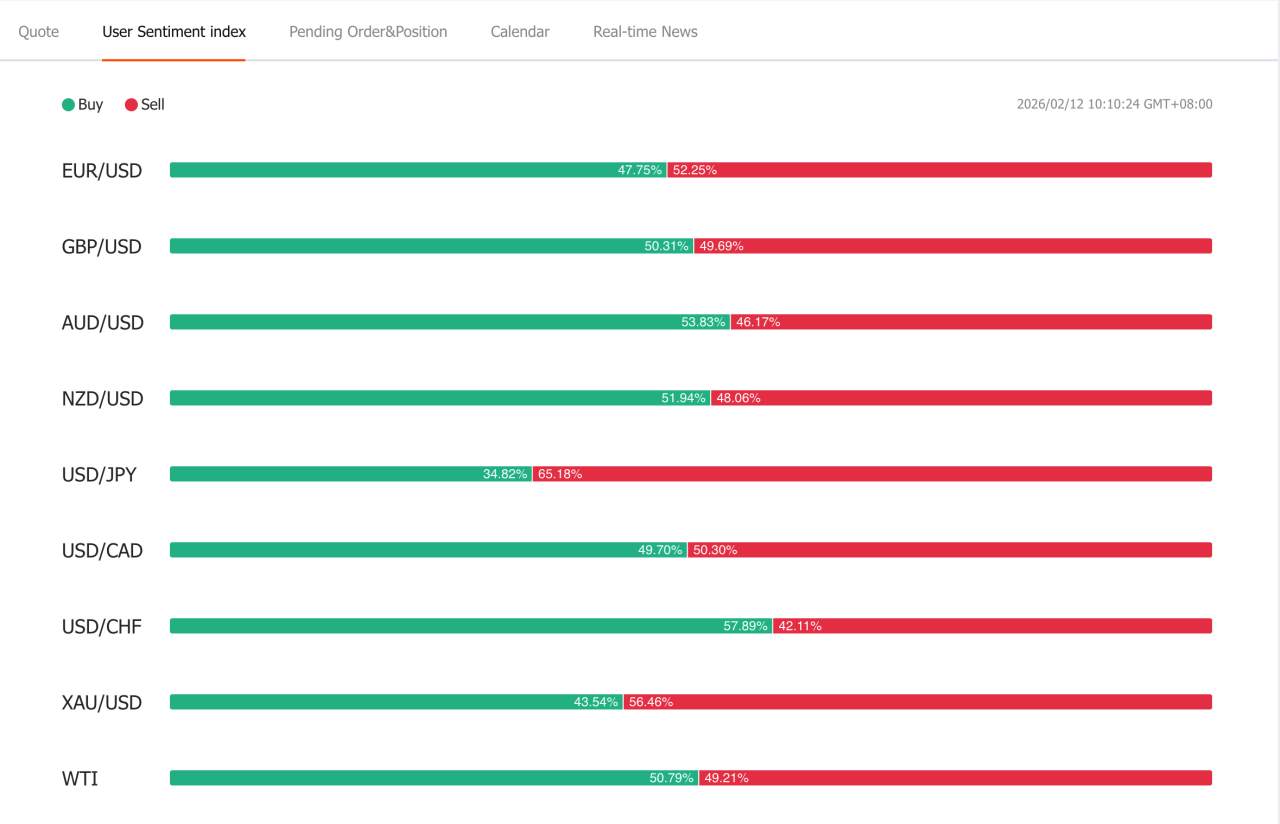
What Is a Sentiment Index in Forex?
-
Popular currencies
-
Major currency pairs
-
Consolidated data from various market participants
Who Is Included in Sentiment Data?
Liquidity Consumers
-
Retail traders
-
Brokers
-
Investment companies
-
Hedge funds
Liquidity Providers
-
Major banks
-
Centralized marketplaces
How to Read Forex Market Sentiment
-
60% of traders are long, 40% are short → Sentiment Index = +20% (bullish)
-
Positive value → buy-side dominance
-
Negative value → sell-side dominance
Sentiment as a Contrarian Indicator
-
If almost all traders are positioned on one side
-
The market may already be overcrowded
-
The probability of reversal increases
How to Use Forex Market Sentiment in Trading
Confirm Technical Signals
Avoid Overcrowded Zones
-
Stop hunts
-
False breakouts
-
Potential reversals
Combine with Technical Indicators
-
Moving average crossovers
-
MACD divergence
-
Structural breakouts
Risk-On and Risk-Off in Market Sentiment
Risk-On
-
AUD, NZD, CAD strengthen
-
Stocks rise
-
Safe-haven assets weaken
Risk-Off
-
USD, JPY, CHF strengthen
-
Stocks decline
-
Gold tends to rise
Conclusion
-
Avoid trading simply because the price is moving
-
Wait patiently for proper timing
-
Stay cautious when the market becomes overcrowded or overreactive
🔔 Follow Followme to stay updated on the market and strengthen your FX knowledge every day
风险提示:本文所述仅代表作者个人观点,不代表 Followme 的官方立场。Followme 不对内容的准确性、完整性或可靠性作出任何保证,对于基于该内容所采取的任何行为,不承担任何责任,除非另有书面明确说明。

-THE END-