


For FX traders, Copytraders, and Fintech audiences, the key is not whether the speech sounded optimistic. The real impact comes from whether it increases policy certainty or extends uncertainty around tariffs, inflation, rates, and AI infrastructure spending, all of which can shift risk sentiment and cross-asset correlations.
Inside Trump’s 2026 State of the Union:
Trump portrayed the past year as a rapid improvement in inflation, jobs, and growth, using stronger household wealth and market performance as proof points. For traders, this is the administration’s preferred backdrop for risk sentiment and policy justification.
2) He doubled down on tariffs as a core market lever
He credited tariffs with supporting economic gains and indicated he plans to keep the tariff framework alive through alternative legal pathways. Trump stated he would raise that worldwide rate to 15%, which can be described as the maximum allowed under Section 122, and with the U.S. trade representative later indicating some countries could face 15% or higher depending on how the administration applies follow-on actions.
3) He linked policy success directly to equities and retirement participation
Trump highlighted stock market strength and retirement account gains, then argued about expanding retirement access so more workers can benefit from the market upside. Markets will treat this as supportive rhetoric until funding and implementation details emerge.
4) He introduced an AI infrastructure message with direct capex implications
Trump proposed a “Rate Payer Protection Pledge” approach, saying major tech firms should fund their own electricity supply for AI data centers to avoid raising household utility bills.
5) He maintained a firm geopolitical posture while emphasizing deal-making. Trump framed U.S. strategy as strength-backed diplomacy and referenced ongoing conflict and deterrence themes. This might call for a tail-risk channel that shows up first in oil, gold, and risk-sensitive FX when it turns into concrete actions or timelines.
The Real Market Signal Was Trade Policy:
Tariffs and trade enforcement were the highest-impact macro themes because they directly affect inflation expectations, growth forecasts, and global risk sentiment. For FX, this can swing the USD through “risk-off vs risk-on” flows and rate expectations. For equities, it can rotate leadership between exporters, import-sensitive retailers, industrials, and domestic defensives.
AI Data Centers and Power Supply Was the Most “Fintech-Adjacent” Catalyst
The AI infrastructure message matters because it connects to a multi-year chain: Data center buildout, power generation, grid investment, and energy pricing.
-
FX: Stronger US capex narratives can support USD when markets interpret it as growth-positive
-
Fintech: Anything that accelerates AI infrastructure tends to reinforce demand for automation, analytics, and trading tech, but trade is still driven by execution details and capex follow-through.
Geopolitics Remains a Tail Risk, Especially for Oil, Gold, and Risk Sentiment
Foreign policy lines (Iran posture, Ukraine framing) typically do not move markets by themselves, but they set expectations for what could become a real catalyst later. For traders, geopolitics is often expressed through:
-
Oil: Supply risk and shipping risk expectations
-
Gold: Safe-haven demand during uncertainty spikes
-
FX: Risk-off flows that can pressure EM FX and support safe-havens
Short-term impact in the first full session after the speech:
In the first U.S. trading session following Trump’s February 24 address, markets posted a measured risk-on bounce rather than a sharp policy-driven repricing. On Wednesday, February 25, the S&P 500 rose 0.8% to 6,946.13, the Dow Jones Industrial Average gained 0.6% to 49,482.15, and the Nasdaq climbed 1.3% to 23,152.08. Reporting on the session emphasized that the move was led mainly by technology and AI positioning, with U.S. Treasury yields described as largely steady.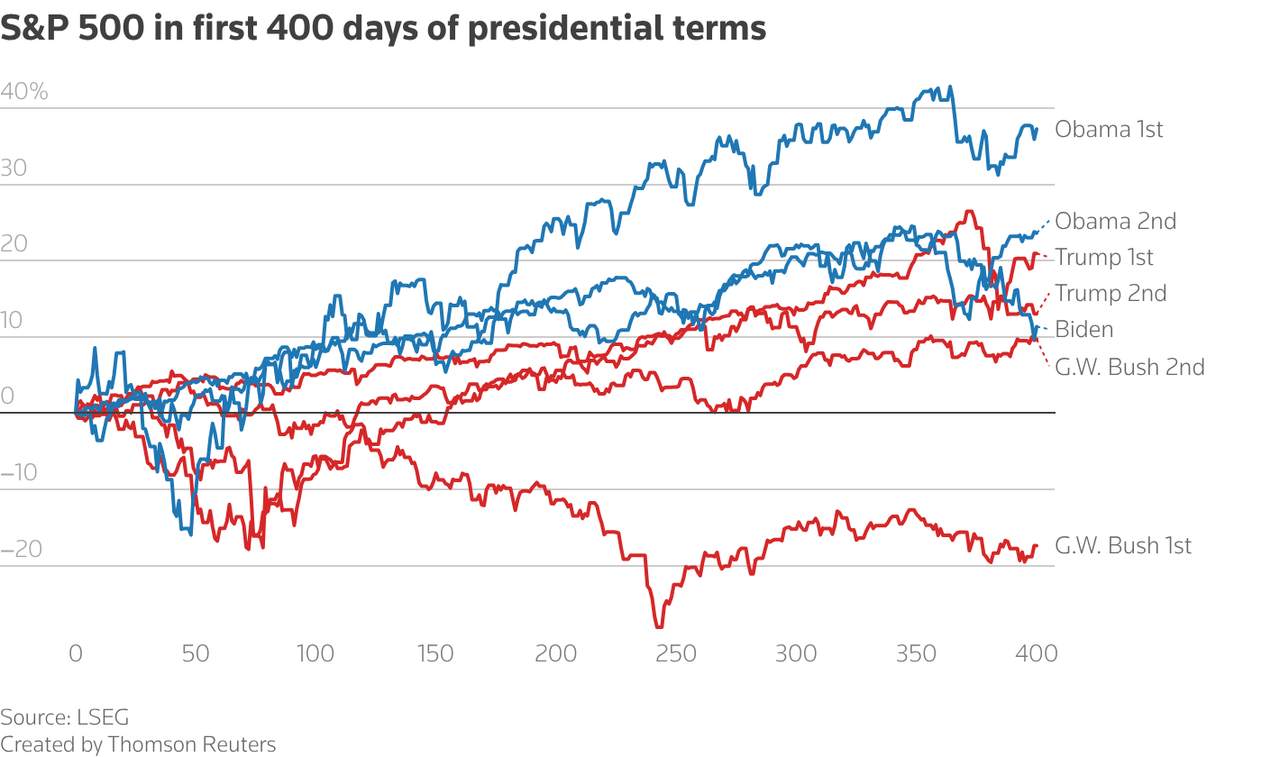
Long-term outlook for the upcoming market:
Downside risk scenario, tariff uncertainty bleeds into inflation and risk appetite: If tariffs rise and uncertainty persists, you can see a messy mix: Inflation stickiness, slower growth, and risk-off rotations. In FX terms, that often shows up as defensive positioning, faster repricing in EM FX, and higher demand for safe havens when trade headlines intensify.
Separately, Trump’s push for a “Rate Payer Protection Pledge” that pressures major tech firms to secure their own power for AI data centers could become a multi year capex theme across utilities, generation, grid equipment, especially with the White House planning a March 4th meeting to formalize commitments.
What Traders Should Watch Next (This Is Where the Edge Is)
The speech is the narrative. The trade is in the follow-through. Focus on these market “triggers”:
-
Tariff implementation steps: new mechanisms, timelines, exemptions, retaliation headlines
-
Rate expectations: Treasury yields, front-end repricing, curve steepening or inversion shifts
-
Risk mood dashboard: equity index futures, volatility measures, gold, oil, high-beta vs defensive sectors
-
AI-powered execution: any concrete deals, capex guidance changes, utility and grid investment signals
Copy Trader Playbook: How to Trade a Headline Regime Without Blowing Up
If the environment becomes policy-headline heavy, the highest-probability approach is structure over prediction:
-
Reduce the size into major headlines, scale only after confirmation
-
Use clear invalidation levels (tight stops or time-based exits)
-
Avoid over-leveraging correlated positions (USD + tech + risk pairs can all move together)
👉 Follow Followme for post-event market breakdowns and a Weekly Economic Calendar update every Monday
风险提示:本文所述仅代表作者个人观点,不代表 Followme 的官方立场。Followme 不对内容的准确性、完整性或可靠性作出任何保证,对于基于该内容所采取的任何行为,不承担任何责任,除非另有书面明确说明。

暂无评论,立马抢沙发