


· 阅读量 20,315
Executive Summary
🔸Oil prices surged above US$110 as Middle East conflict disrupted supplies.
🔸Asian markets plunged, with South Korea and Japan hit hardest.
🔸Governments imposed fuel caps and rationing to contain panic buying.
(March 9) U.S. oil prices surged above US$110 per barrel on March 9, 2026, the highest in nearly four years, as the war in Iran intensified and disrupted global energy supplies.
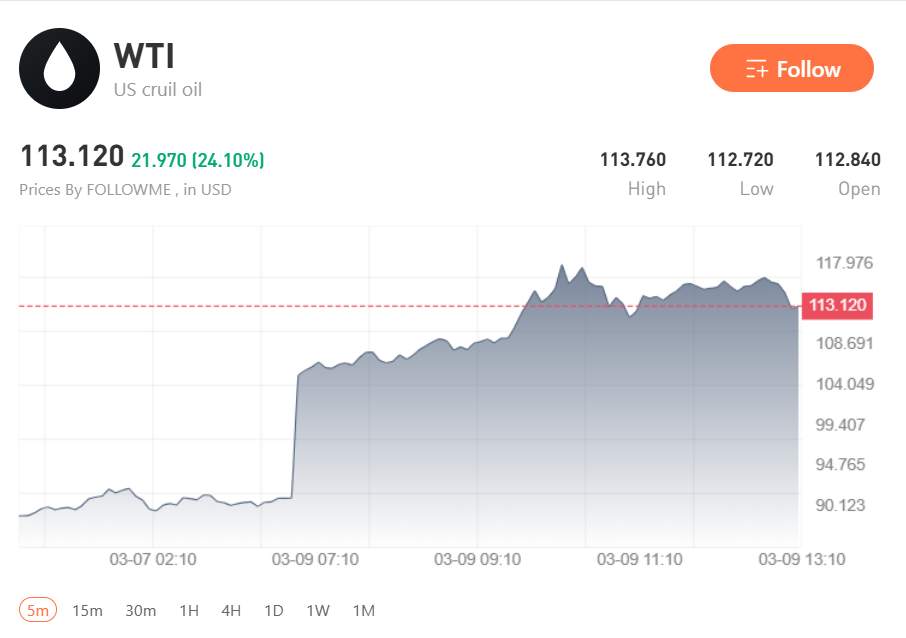
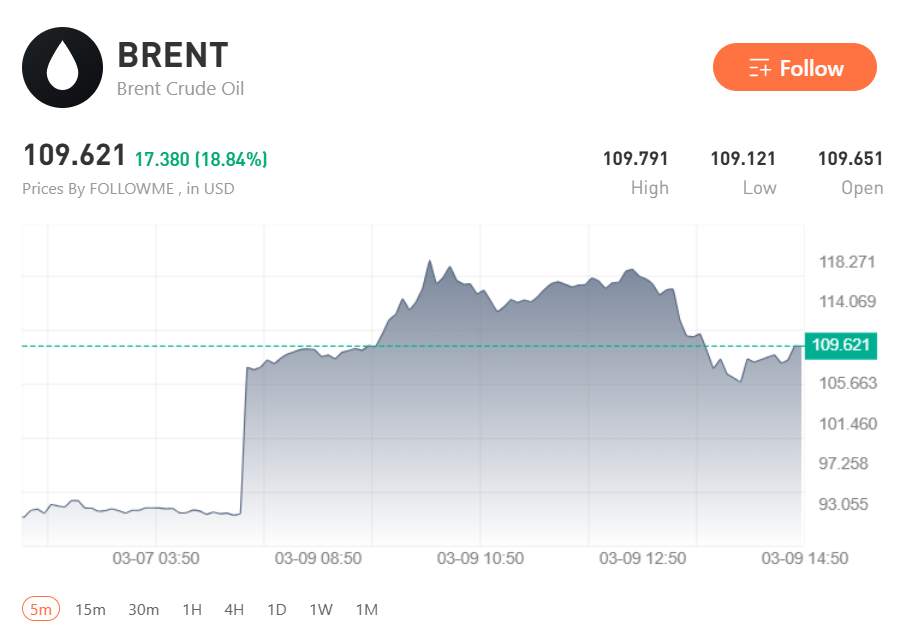
WTI crude futures spiked nearly 30% to US$119, while Brent crude climbed above US$118 after Israeli strikes hit oil storage facilities in Tehran. Iraq, Kuwait, and Qatar slashed production, fueling fears of prolonged shortages.
The shock sent Asian markets plunging: South Korea’s Kospi fell over 8%, Japan’s Nikkei dropped 7%, and Hong Kong’s Hang Seng lost 3%. Governments rushed to respond, with Seoul imposing a rare fuel price cap and announcing a US$66.9 billion stabilization program, while Bangladesh and Pakistan introduced rationing amid panic buying.
The conflict escalated after Mojtaba Khamenei was named Iran’s new supreme leader, with Iran firing missiles at Israel for the first time. U.S. President Donald Trump dismissed the oil spike as temporary, calling it a “small price to pay” to eliminate Iran’s nuclear threat.
Analysts warn prices could climb further if the Strait of Hormuz remains closed, raising risks of a global recession and renewed inflationary pressures.
风险提示:本文所述仅代表作者个人观点,不代表 Followme 的官方立场。Followme 不对内容的准确性、完整性或可靠性作出任何保证,对于基于该内容所采取的任何行为,不承担任何责任,除非另有书面明确说明。
喜欢的话,赞赏支持一下

-THE END-