Market backdrop: Global markets shifted into a more optimistic tone after diplomatic progress in the Middle East appeared to improve sentiment, with Israel signaling readiness for direct negotiations with Lebanon. That helped support U.S. equities and weakened the U.S. dollar as investors moved away from defensive positioning and back into risk assets.
However, the broader situation remains fragile. For now, markets are trading on relief, but not yet on full confidence.
Dollar reaction:
Currently, the softer U.S. dollar reflects a classic improvement in risk sentiment. When geopolitical tension eases, at least temporarily, demand for safe haven assets such as the greenback tends to cool. This creates room for higher beta currencies and risk-linked assets to recover. Still, traders should be careful not to read too much into one session of dollar weakness, because the move appears driven more by sentiment than by a major shift in the U.S. economic or policy outlook.
Why the dollar is under pressure now:
- Risk appetite improved as traders rotated into equities and away from defensive holdings
- Safe-haven demand eased after diplomatic developments reduced immediate panic
- Markets remain cautious because the ceasefire story is still fragile and can reverse quickly
Oil stays in focus:
While stock markets welcomed signs of de-escalation, crude prices remained firm because disruptions linked to the Strait of Hormuz have not fully cleared. Supply concerns continue to hang over the market, and that keeps a geopolitical premium built into crude.
Why oil still matters so much:
-
Hormuz remains a major chokepoint for global oil shipments
-
Any disruption to tanker flow can quickly tighten supply expectations
-
Elevated oil prices can feed back into inflation and central bank expectations
-
Commodities traders and FX traders alike need to monitor energy headlines closely
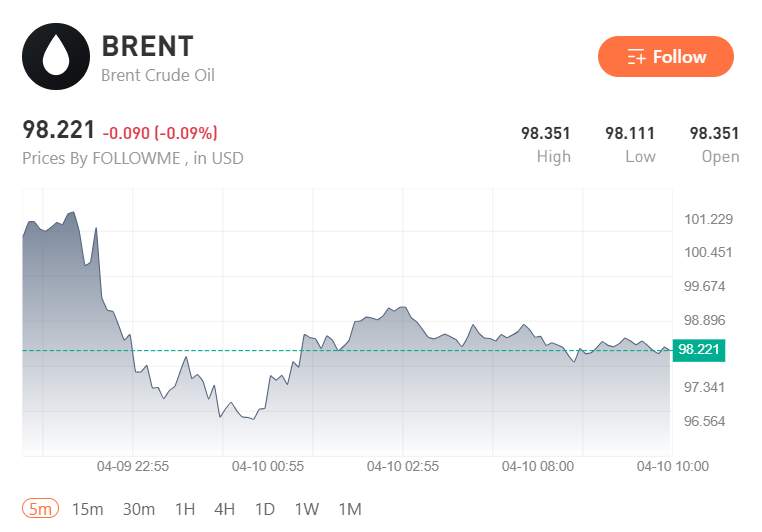
Why oil matters for forex traders: Higher oil prices continue to have a direct impact on currency markets, especially with Brent crude trading around $98.221 per barrel and WTI near $98.460 per barrel. When crude stays elevated, oil-linked currencies and economies tied to energy exports may find support, while oil-importing countries can face added pressure from rising input and transportation costs. More importantly, firm oil prices can complicate the inflation outlook by keeping energy-related price pressures elevated.
Gold and precious metals:
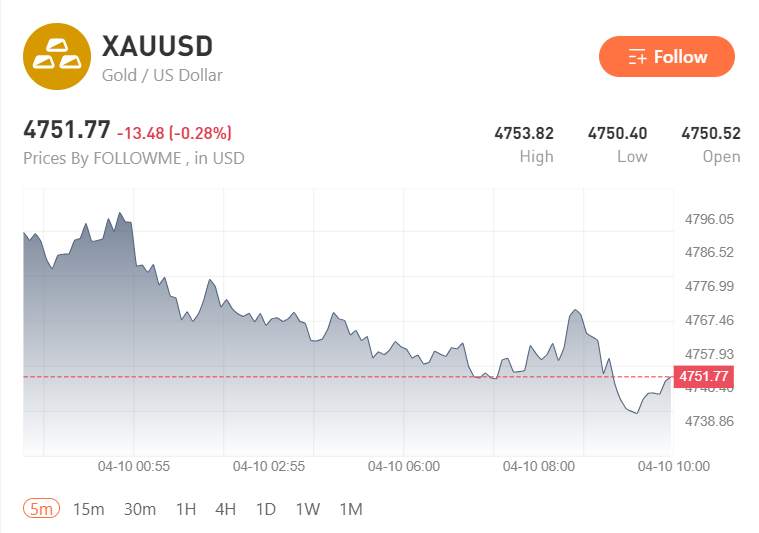
Gold continues to reflect the market’s mixed mood, with spot gold holding near $4,751.77per ounce and gold futures around $4,754.18 per ounce. A weaker dollar is helping support bullion by improving its appeal in global markets, while lingering geopolitical uncertainty is still keeping defensive demand alive. This combination has allowed gold to stay firm, with silver and platinum also moving higher alongside it.
What gold is signaling right now:
-
Dollar weakness is helping bullion remain supported
-
Precious metals are still attracting flows as traders hedge against uncertainty
-
Safe haven demand has softened, not disappeared
Macro layer:
U.S. economic data added another layer to the market narrative. Inflation remains above the Federal Reserve’s target, while growth data has shown signs of slowing. Jobless claims data continues to suggest that the labor market is not breaking down, but the broader picture is still one of sticky inflation and moderate growth:
-
Inflation is still too high to give the Fed full confidence
-
Growth has softened, but not sharply enough to force a quick policy pivot
-
Labor conditions remain relatively stable, which gives the Fed room to stay patient
-
Markets may stay reactive to every major inflation print and policy signal
What traders should watch next:
-
CPI and inflation expectations for clues on the Fed’s next move
-
Middle East headlines for signs of either de-escalation or renewed disruption
-
Oil price behavior as a leading signal for inflation pressure
-
Dollar index movement to see whether weakness continues or reverses
-
Gold and silver flows for signs of persistent defensive positioning
What this means for forex, commodities, and copy traders: This is a market where cross-asset awareness matters. Dollar weakness is currently being driven by risk sentiment, oil strength is being driven by supply risk, and gold strength is being supported by both defensive demand and a weaker dollar. For copy traders and active traders, this means broad directional assumptions may be less effective than focused, catalyst-driven setups. Stronger trade decisions will likely come from understanding what is driving each asset individually, rather than assuming all markets are moving for the same reason.
Download Followme Application
Follow us on:









暂无评论,立马抢沙发