

The ISM manufacturing PMI for November slipped to 48.2 from 48.7 in October, missing the 49.0 consensus to reflect the ninth consecutive month of manufacturing contraction.
The deterioration came despite a production rebound, as new orders weakened and tariff-related uncertainty continued to weigh on the sector.
Key Takeaways from the November ISM Manufacturing Report
- The index fell to 48.2 from 48.7, missing expectations and extending the contractionary streak to nine months
- New orders deteriorated: The new orders index dropped to 47.4 from 49.4, signaling weakening demand after briefly flirting with expansion
- Production jumped into expansion: The production index surged to 51.4 from 48.2, providing one of few bright spots in the report
- Employment pressures intensified: The employment index fell to 44.0 from 46.0, with 67% of companies focused on managing headcounts rather than hiring
- Tariff impact continued: Prices remained elevated at 58.5, up from 58.0, as steel and aluminum tariffs continued flowing through supply chains
- Supply chains eased: Supplier deliveries returned to faster territory at 49.3 from 54.2, suggesting reduced demand pressures
Link to official ISM Manufacturing PMI (November 2025)
The report painted a picture of persistent manufacturing weakness driven by tariff uncertainty and weak demand. Only four of 18 industries reported growth in November, down from seven in October.
Survey respondents across multiple sectors highlighted severe tariff impacts. Transportation equipment manufacturers reported implementing permanent workforce reductions and developing offshore manufacturing capacity that would have otherwise been for U.S. export. Chemical producers noted that tariffs and economic uncertainty continue weighing on demand for construction-related products.
Particularly concerning were reports of trade confusion causing operational disruptions, with suppliers encountering errors when attempting to export to the U.S. Some respondents noted that artificial intelligence was producing confusing and inaccurate information, contributing to apprehensive consumer buying patterns and forecasting challenges.
Market Reactions
U.S. Dollar vs. Major Currencies: 5-min
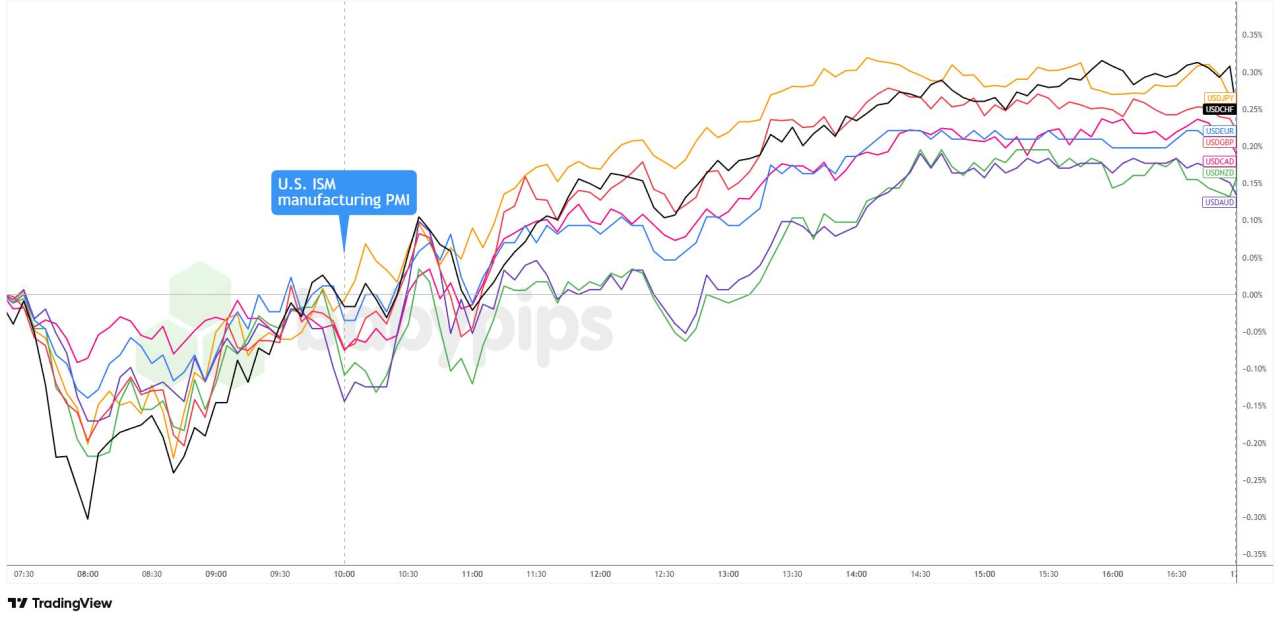
Overlay of USD vs. Major Currencies Chart by TradingView
The U.S. dollar, which took hits from dovish FOMC expectations earlier in the day, found a bottom just before the U.S. session started.
The Greenback dipped again after the ISM PMI release, since the weak manufacturing numbers reinforced expectations for continued Fed easing. But the dollar quickly caught broader and steadier support, likely as traders shifted their attention to rising U.S. 10-year bond yields along with growing risk aversion and safe haven demand.
By the end of the day, USD finished mixed, trading higher against most majors except for the stronger EUR and JPY. The yen stood out, rallying hard on Bank of Japan (BOJ) rate hike speculation that pushed markets to price in roughly 76% odds of a December BOJ move.

暂无评论,立马抢沙发