



Global Forex markets remained volatile today as geopolitical tensions and energy supply concerns continued to influence investor sentiment. Rising oil prices and uncertainty around Middle East supply routes have increased defensive positioning in financial markets, while the U.S. dollar continues to trade near multi-month highs. Energy markets and geopolitical developments are currently among the most important macro drivers shaping currency markets.
Forex market in a risk-off environment.
The U.S. dollar emerged as the primary beneficiary of defensive market sentiment. The dollar is on track for a second consecutive weekly gain, as geopolitical uncertainty drives investors toward safe-haven assets. The U.S. Dollar Index (DXY) rose to approximately 99.63, close to its highest level of 2026. During the week, the euro traded near its weakest level since November, while the Japanese yen also weakened, prompting discussions about the possibility of intervention by Japanese authorities. (Source: Reuters). These developments highlight the continued role of the U.S. dollar as the central anchor of the
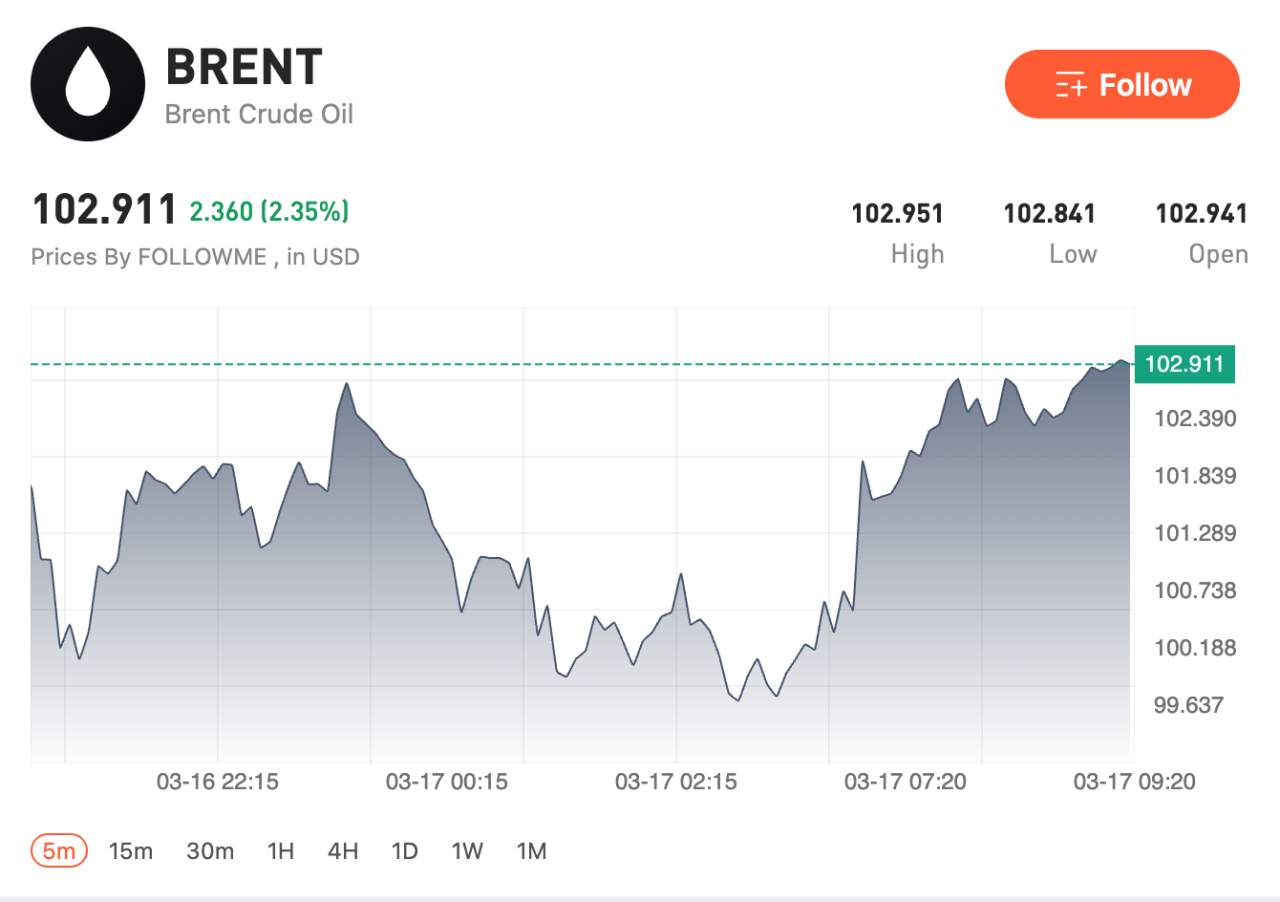
Energy markets remained a key driver for currency sentiment today. Oil prices moved higher as traders assessed potential supply disruptions linked to Middle East tensions.
• Brent crude traded around $102 per barrel
• WTI crude hovered near $96 per barrel
The focus remains on the Strait of Hormuz, a critical energy shipping route responsible for roughly 20% of global oil supply. Any disruption to this corridor could significantly impact global energy markets. Higher oil prices can contribute to renewed inflation pressure globally and may influence expectations for central bank policy paths.
3) Gold shows volatility near elevated levels
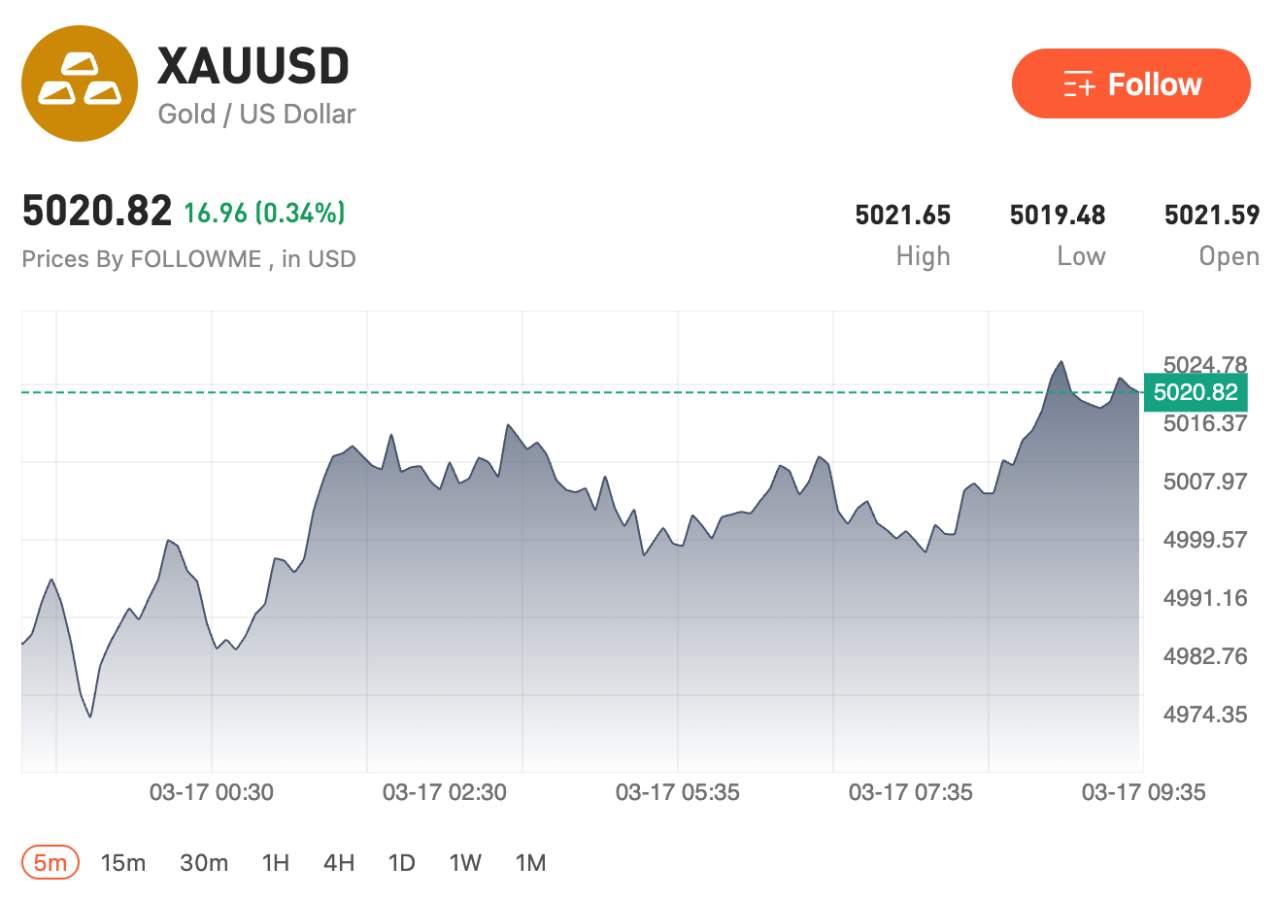
Gold prices remained volatile after the strong rally seen earlier in the year. Spot gold is trading around $5,020 per ounce, as markets balance safe-haven demand against expectations for higher interest rates. Gold continues to be supported by:
• geopolitical uncertainty
• energy-driven inflation risks
• strong long-term demand from central banks.
As a result, gold remains an important sentiment indicator for global financial markets and the Forex environment.
4) Energy dynamics influence currency movements
Rising energy prices can have asymmetric effects on currencies. Countries heavily dependent on energy imports, such as parts of Europe and Japan, may experience currency pressure when oil prices rise sharply. At the same time, commodity-linked currencies like:
• AUD
• NZD
often experience volatility depending on global risk sentiment.
Trader Perspective
The current Forex environment remains headline-driven, meaning geopolitical developments and energy market movements can rapidly shift market direction. In this environment traders should expect:
• higher intraday volatility
• frequent false breakouts
• increased stop-loss sweeps.
Appropriate strategies include:
• trading around key support and resistance levels
• monitoring oil and gold as sentiment indicators
• reducing position size during periods of elevated volatility.
Conclusion
Key highlights for the Forex market on March 17, 2026 include:
• DXY trading near 100
• EUR/USD around 1.1520
• GBP/USD near 1.3330
• Brent crude around $102 per barrel
• Gold near $5,020 per ounce
In the near term, Middle East geopolitical developments, energy prices, and upcoming central bank signals will remain the key drivers of global Forex markets.
Want to stay ahead of major macro developments that move the Forex market?
👉Follow Followme and check out the Weekly Economic Calendar




Want to stay ahead of major macro developments that move the Forex market?
👉Follow Followme and check out the Weekly Economic Calendar
Download Followme Application
Follow us on:
风险提示:本文所述仅代表作者个人观点,不代表 Followme 的官方立场。Followme 不对内容的准确性、完整性或可靠性作出任何保证,对于基于该内容所采取的任何行为,不承担任何责任,除非另有书面明确说明。

暂无评论,立马抢沙发